
Iron is an essential mineral that your body needs to make haemoglobin, support oxygen transport and maintain healthy energy levels. While iron deficiency is common, especially among women and vegetarians, a well-planned diet can help you meet your daily requirements.
From lentils and leafy greens to sesame seeds and jaggery, Indian diets offer plenty of iron-rich food options. Here is a practical guide to the best iron-rich foods, how to improve iron absorption and how to include them in everyday meals.
Why Iron Is Essential For Your Body
Iron plays an important role in producing haemoglobin, the protein in red blood cells that carries oxygen throughout the body. It also supports normal muscle function, energy production and several processes involved in maintaining healthy cells.
Your body cannot produce iron on its own, which means it needs to come from food or supplements when medically advised. Including varied iron-rich foods in your daily diet can help support adequate intake.
Top Health Benefits Of Iron
- Supports oxygen transport: Iron is essential for haemoglobin production, which allows red blood cells to transport oxygen around the body.
- Helps maintain energy levels: Adequate iron supports normal energy production and can help prevent tiredness associated with iron deficiency.
- Supports healthy red blood cells: Iron contributes to the formation of healthy red blood cells.
- Supports muscle function: Iron is involved in the production of myoglobin, a protein that helps muscles use oxygen.
- Supports cognitive function: Adequate iron is important for normal brain function and development.
- Supports immune function: Iron contributes to the normal functioning of the immune system.
How Much Iron Do You Need Every Day?
The amount of iron you need depends on your age, gender and life stage. Adult men generally require around 8 mg of iron per day, while women aged 19 to 50 generally require around 18 mg per day. Requirements increase during pregnancy.
People following vegetarian or vegan diets may need to pay particular attention to iron intake because plant foods primarily provide non-heme iron, which is absorbed less efficiently than heme iron.
Signs And Symptoms Of Iron Deficiency
|
Sign or Symptom |
What It May Indicate |
|
Persistent tiredness |
Reduced oxygen delivery to tissues can contribute to fatigue. |
|
Weakness |
Low iron levels may affect energy and physical performance. |
|
Pale skin |
Iron deficiency can affect the appearance of the skin and inner eyelids. |
|
Shortness of breath |
Reduced haemoglobin can make oxygen transport less efficient. |
|
Dizziness |
Iron deficiency may be associated with light-headedness or dizziness. |
|
Headaches |
Some people with iron deficiency experience recurring headaches. |
|
Brittle nails |
Changes to nails can occur with iron deficiency. |
|
Poor concentration |
Low iron status may affect cognitive function. |
If you experience persistent symptoms, speak to a healthcare professional rather than relying only on dietary changes.
15 Iron-Rich Indian Foods Every Family Should Eat
- Lentils: Masoor dal, moong dal and other lentils provide plant-based iron and can be easily included in everyday meals.
- Chickpeas: Chana is a versatile source of non-heme iron and can be used in curries, salads and snacks.
- Rajma: Kidney beans provide iron along with protein and fibre.
- Soybeans: Soybeans are among the more iron-rich legumes and can be used in several vegetarian preparations.
- Spinach: This leafy green provides iron along with folate and other nutrients.
- Amaranth leaves: Amaranth or chaulai is a traditional leafy green that can contribute to iron intake.
- Sesame seeds: Til provides iron and can be added to chutneys, ladoos and vegetable preparations.
- Pumpkin seeds: These seeds can be sprinkled over meals or eaten as a snack.
- Flaxseeds: Flaxseeds provide iron along with fibre and healthy fats.
- Cashews: Cashews contain iron and can be incorporated into snacks and festive dishes.
- Ragi: Finger millet provides iron and can be used to prepare rotis, porridge and dosa.
- Bajra: Pearl millet is a traditional grain that contributes iron to the diet.
- Amaranth grains: Rajgira can be used in porridges, rotis and snacks.
- Dried apricots: These provide iron in a naturally sweet form and can be eaten as a snack.
- Jaggery: Jaggery contains some iron, although it should not be treated as a primary source of iron because it is also high in sugar.
Heme Iron Vs Non-Heme Iron: What’s The Difference?
|
Type of Iron |
Main Sources |
Absorption |
|
Heme iron |
Meat, poultry and seafood |
Generally absorbed more efficiently by the body. |
|
Non-heme iron |
Lentils, beans, leafy greens, seeds and fortified foods |
Absorption varies and can be improved by pairing foods with vitamin C. |
Best Indian Foods Naturally Rich In Iron
Indian cuisine offers numerous ways to incorporate iron-rich food items into everyday meals.
- Dal: Pair different varieties of dal with vegetables and grains for a balanced meal.
- Chana: Use chickpeas in curries, chaats and salads.
- Rajma: Combine kidney beans with rice or roti for a filling meal.
- Ragi: Use ragi flour in dosa, roti or porridge.
- Bajra: Prepare bajra rotis as an iron-containing traditional grain option.
- Green leafy vegetables: Include spinach, amaranth and other seasonal greens in regular meals.
- Sesame seeds: Add til to chutneys, vegetable dishes or homemade snacks.
Iron-Rich Foods For Vegetarians
Vegetarians can obtain iron from a wide range of plant foods.
- Lentils: Add dal to lunch or dinner regularly.
- Beans: Include rajma, chickpeas and other beans in meals.
- Millets: Use ragi and bajra in rotis, dosas and porridges.
- Seeds: Add sesame, pumpkin and flaxseeds to meals and snacks.
- Leafy greens: Include seasonal greens in sabzis, dals and soups.
- Nuts: Use cashews and other nuts as part of a varied diet.
Foods That Improve Iron Absorption
The amount of iron your body absorbs can depend on what you eat alongside an iron-containing food.
- Vitamin C-rich foods: Vitamin C can improve the absorption of non-heme iron.
- Citrus fruits: Lemon, oranges and other citrus fruits can complement plant-based iron sources.
- Tomatoes: Adding tomatoes to meals can provide vitamin C and acidity that may support iron absorption.
- Capsicum: Bell peppers are a convenient vitamin C-rich addition to iron-containing meals.
- Amla: Indian gooseberry is particularly rich in vitamin C and can be included alongside meals.
Vitamin C-Rich Foods That Boost Iron Absorption
- Amla: Add fresh amla to chutneys or eat it as part of a meal.
- Guava: Enjoy guava as a snack alongside an iron-rich diet.
- Oranges: Include citrus fruits during the day.
- Lemons: Add lemon juice to dal, salads and cooked vegetables.
- Capsicum: Add fresh peppers to salads and stir-fries.
- Tomatoes: Include tomatoes in curries, salads and chutneys.
- Foods And Drinks That Can Reduce Iron Absorption
- Tea: Tea contains compounds that can reduce the absorption of non-heme iron when consumed with meals.
- Coffee: Coffee may similarly interfere with non-heme iron absorption when consumed around meals.
- Calcium-rich foods: Calcium can interfere with iron absorption in certain circumstances.
- Some high-phytate foods: Phytates found in certain grains, legumes, nuts and seeds can reduce non-heme iron absorption.
- Some high-polyphenol foods: Certain plant compounds can bind iron and reduce its absorption.
Weekly Iron-Rich Meal Plan
|
Day |
Breakfast |
Lunch |
Dinner |
|
Monday |
Ragi dosa with chutney |
Dal, rice and spinach sabzi |
Bajra roti with chana |
|
Tuesday |
Vegetable poha with seeds |
Rajma rice with salad |
Ragi roti with mixed vegetables |
|
Wednesday |
Ragi porridge with nuts |
Chana curry with roti |
Dal with leafy greens |
|
Thursday |
Besan chilla with tomato chutney |
Bajra roti with dal and vegetables |
Chickpea salad with roti |
|
Friday |
Ragi dosa with sambar |
Rajma with rice and salad |
Spinach dal with roti |
|
Saturday |
Vegetable upma with seeds |
Chana masala with roti |
Bajra khichdi with vegetables |
|
Sunday |
Ragi cheela with fruit |
Dal, rice and leafy greens |
Mixed bean curry with roti |
Easy Indian Recipes Using Iron-Rich Foods
- Palak Dal: Combine leafy greens with lentils for an easy everyday dish.
- Chana Chaat: Toss chickpeas with tomatoes, lemon, onions and herbs for a simple snack or side.
- Ragi Dosa: Use ragi flour to make a nutrient-rich breakfast.
- Rajma Masala: Prepare kidney beans in a tomato-based gravy and serve with rice.
- Bajra Roti: Use pearl millet flour to make a traditional accompaniment for vegetables and dals.
- Til Chutney: Blend sesame seeds with spices to make a flavourful accompaniment.
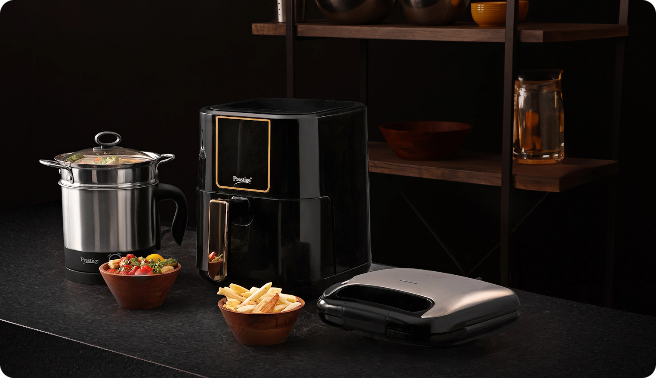
How Modern Kitchen Appliances Help Prepare Iron-Rich Meals
Modern appliances can make it easier to include iron-rich food recipes in a busy routine.
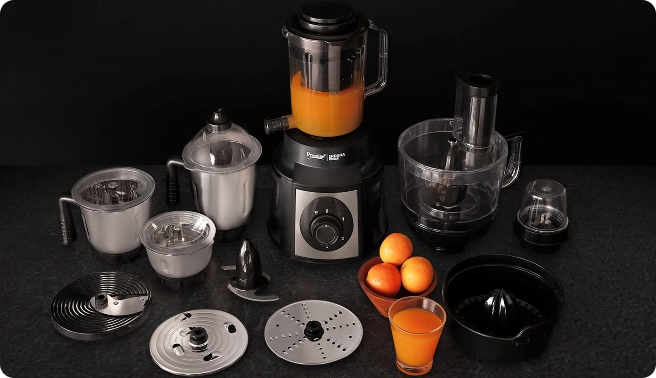
- Mixer grinder: Grind seeds, nuts, leafy greens and ingredients for chutneys and batters.
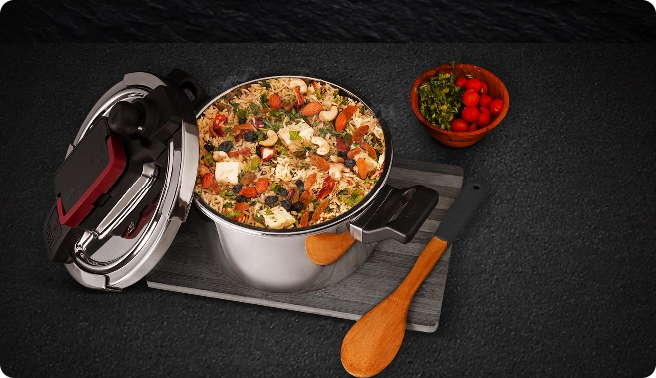
- Pressure cooker: Cook rajma, chickpeas and lentils efficiently.
- Food processor: Chop vegetables and greens quickly for everyday cooking.
- Induction cooktop: Provides convenient temperature control while preparing dals and curries.
- OTG: Roast seeds, nuts and vegetables or prepare homemade snacks.
Best Cookware For Healthy Everyday Cooking
- Heavy-bottomed kadai: It distributes heat evenly and works well for dals, vegetables and curries.
- Stainless steel saucepan: It is versatile for cooking grains, lentils and vegetables.
- Pressure cooker: It is particularly useful for beans, chickpeas and dals that require longer cooking.
- Cast-iron cookware: It is durable and versatile for everyday Indian cooking.
- Steamer: It allows vegetables and other foods to be cooked with minimal added fat.
Expert Tips To Maintain Healthy Iron Levels Naturally
- Eat a varied diet: Include legumes, grains, vegetables, seeds and nuts rather than relying on a single iron-rich food.
- Pair plant-based iron with vitamin C: Add lemon, tomatoes, amla or other vitamin C-rich foods to meals.
- Avoid tea or coffee with iron-rich meals: Leave some time between these beverages and your main meals.
- Pay attention to increased requirements: Pregnancy, menstruation and certain health conditions can increase iron needs.
- Get persistent symptoms checked: If you experience ongoing fatigue or other possible signs of deficiency, consult a healthcare professional.
Common Myths About Iron-Rich Foods
- Myth: Spinach is the best source of iron: Spinach contains iron, but absorption is affected by compounds naturally present in leafy greens.
- Myth: Jaggery can replace iron supplements: Jaggery contains some iron, but it should not be considered an equivalent replacement for medically prescribed supplementation.
- Myth: Vegetarians cannot get enough iron: A well-planned vegetarian diet can include many sources of non-heme iron.
- Myth: More iron is always better: Excessive iron can be harmful, so supplements should only be taken when recommended by a healthcare professional.
- Myth: Drinking tea with meals has no effect on iron: Tea can reduce the absorption of non-heme iron when consumed around meals.
Conclusion: Build A Healthier Diet With Iron-Rich Foods
Including iron-rich foods in your daily diet does not have to involve complicated recipes or major changes to your eating habits. Dal, beans, millets, leafy greens, seeds and nuts can all become part of familiar Indian meals. Pairing plant-based iron sources with vitamin C-rich foods can further support absorption.
A varied, balanced diet is the best foundation for maintaining healthy iron levels. If you suspect an iron deficiency, speak to a healthcare professional and consider getting your iron status tested rather than self-prescribing supplements.
Frequently Asked Questions (FAQs)
1) What Are The Best Iron-Rich Foods To Include In A Daily Diet?
- Lentils: They are versatile and can be included in dal, soups and curries.
- Chickpeas: They work well in curries, salads and snacks.
- Rajma: Kidney beans provide iron along with protein and fibre.
- Ragi: This traditional millet can be used in dosa, roti and porridge.
- Sesame seeds: Til can be added to chutneys, vegetables and snacks.
2) What Are The Top 10 Iron-Rich Foods For Vegetarians?
- Lentils
- Chickpeas
- Rajma
- Soybeans
- Spinach
- Amaranth leaves
- Sesame seeds
- Pumpkin seeds
- Ragi
- Bajra
3) Which Foods Are Rich In Iron For Females?
A) Women of reproductive age have higher iron requirements than adult men, making regular consumption of iron-containing foods particularly important. Good options include lentils, chickpeas, rajma, soybeans, leafy greens, sesame seeds, pumpkin seeds, ragi and bajra.
4) What Foods Are Rich In Iron For Babies?
A) Babies have specific nutritional requirements that change with age and stage of development. Once complementary foods are introduced, iron-rich options may include iron-fortified cereals, lentils, beans, pureed meats where appropriate and other age-appropriate foods. Parents should follow guidance from their paediatrician before introducing new foods or supplements.
5) How Can I Get More Iron From My Food?
- Include an iron source in regular meals: Add dal, beans, leafy greens, millets or seeds to your diet.
- Pair plant-based iron with vitamin C: Add lemon, tomatoes, amla or citrus fruits to meals.
- Separate tea and coffee from meals: Avoid consuming them alongside iron-rich foods.
- Eat a varied diet: Combine different plant-based sources throughout the week.
- Address deficiency medically: If blood tests show iron deficiency, follow your healthcare professional’s advice on dietary changes or supplements.